Introduction
Online gaming has always been at the forefront of technological innovation. From text-based adventures in the 1970s to massive multiplayer universes today, the industry continually evolves to create deeper, more engaging experiences. Now, with artificial intelligence (AI) and virtual reality (VR) transforming digital landscapes, the future of online gaming promises to be more immersive and intelligent than ever before. These technologies are not only enhancing gameplay but also redefining how players interact, compete, and connect in virtual spaces. This article explores the future of online gaming with AI and VR, highlighting their potential, challenges, and the exciting opportunities they bring.
The Evolution Toward Immersive Gaming
Gaming has always aimed to blur the line between reality and virtuality. The shift from 2D graphics to 3D environments, from single-player campaigns to persistent online slot gacor worlds, reflects the industry’s desire to immerse players more fully. AI and VR are the next logical steps in this journey, combining intelligence and immersion to create dynamic, lifelike virtual worlds.
AI ensures that games respond intelligently to player actions, while VR provides the sensory depth to make those interactions feel real. Together, they have the power to revolutionize not only how games are played but how they are experienced.
The Role of Artificial Intelligence in Online Gaming
AI has already transformed online gaming in significant ways, and its future potential is vast.
Smarter Non-Playable Characters (NPCs)
Traditionally, NPCs followed pre-programmed patterns that players could predict and exploit. AI allows NPCs to adapt dynamically, learning from player behavior to create more challenging and realistic encounters. Future NPCs may act like human players, making decisions, collaborating, and even negotiating in real time.
Personalized Gameplay
AI can analyze player behavior, skill levels, and preferences to tailor experiences. For instance, difficulty levels could adjust automatically, ensuring a balanced challenge for both casual and hardcore gamers. Personalized narratives could also emerge, where storylines adapt based on player choices and actions.
Anti-Cheat Systems
Online gaming has long struggled with cheating. AI-driven detection systems are becoming increasingly effective at identifying suspicious patterns, preserving fair play and ensuring a level playing field.
Procedural Content Generation
AI can generate unique environments, quests, or puzzles on the fly, making games virtually endless. This technology creates diverse experiences without requiring developers to manually design every element, ensuring games remain fresh and engaging.
Virtual Reality and the Future of Immersion
While AI adds intelligence, VR offers immersion. By placing players directly inside digital worlds, VR transforms the act of gaming into a full-bodied experience.
Presence in Virtual Worlds
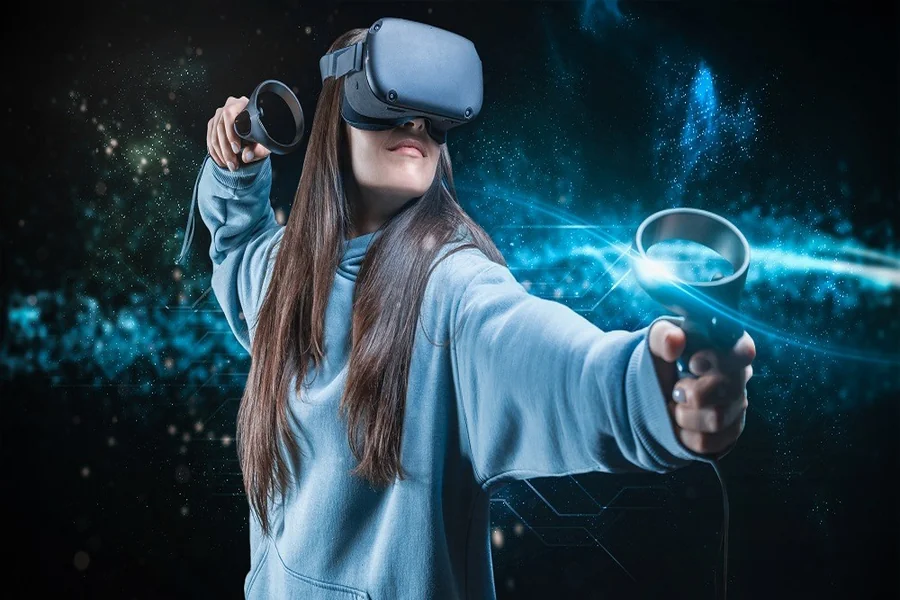
VR headsets such as the Meta Quest, HTC Vive, and PlayStation VR allow players to feel physically present in games. Hand tracking, motion controls, and haptic feedback deepen immersion, making combat, exploration, or social interaction far more engaging.
Social VR Experiences
Online gaming in VR is not limited to combat or adventure. Platforms like VRChat and Rec Room demonstrate the potential for virtual social spaces, where players meet, chat, and even attend events. In the future, these social hubs may rival real-world interactions, blending gaming with digital community building.
Cross-Platform Integration
As VR becomes more accessible, cross-platform integration will allow VR and non-VR players to share the same spaces. This inclusivity will ensure that VR adoption enhances, rather than isolates, online gaming communities.
The Convergence of AI and VR in Online Games
The true revolution lies in the combination of AI and VR. Together, they can create dynamic, personalized, and hyper-immersive virtual environments.
- Adaptive VR Worlds: AI-driven systems could reshape virtual environments in real time based on player emotions, detected through biometrics or behavior. Imagine a horror game that becomes scarier as it senses increased player tension.
- Realistic Social Interactions: AI can enhance social VR by animating avatars with lifelike facial expressions, gestures, and voice modulation, making interactions feel natural and authentic.
- Learning and Training: VR combined with AI will expand beyond entertainment into education and professional training. Realistic simulations powered by AI will allow players to practice real-world skills in safe, immersive settings.
Economic Opportunities in AI and VR Gaming
The future of online gaming with AI and VR is not just about play—it’s about economics.
- Virtual Economies: As VR worlds grow, digital goods such as clothing, real estate, and collectibles will become increasingly valuable. AI will help manage these economies, ensuring balance and preventing exploitation.
- Esports and Spectatorship: VR esports could allow fans to watch games as if they were physically present in the arena. AI could enhance this experience by offering real-time analytics, commentary, and player insights.
- Personalized Marketing: AI in VR environments will allow advertisers to deliver targeted experiences, opening new revenue streams for developers while maintaining immersion for players.
Challenges Ahead
Despite its promise, the future of AI and VR in gaming faces challenges.
Accessibility and Cost
High-end VR equipment remains expensive, and AI integration requires significant computing power. Bridging this digital divide will be essential to ensure widespread adoption.
Motion Sickness and Health Concerns
VR still causes discomfort for some users. As virtual sessions become longer and more immersive, addressing health issues like eye strain and motion sickness will be critical.
Ethical Concerns with AI
The use of AI raises questions about data privacy, manipulation, and fairness. Developers must ensure AI is transparent and ethical, particularly in competitive environments.
Balancing Realism and Fun
While realism enhances immersion, games must remain enjoyable. Developers must carefully balance AI-driven unpredictability and VR immersion to ensure that games don’t become overwhelming or frustrating.
The Future Metaverse and Online Gaming
The vision of the metaverse—a persistent, shared virtual space where users can play, work, and socialize—is closely tied to AI and VR. Online gaming is expected to serve as the foundation for this digital universe. Games like Fortnite, Roblox, and Minecraft are already acting as proto-metaverses, combining creativity, commerce, and community.
In the future, AI-driven VR games could seamlessly integrate with larger metaverse platforms, where players move effortlessly between entertainment, education, and real-world tasks. Online gaming will not just shape the metaverse; it will be the metaverse for many users.
Conclusion
The future of online gaming with AI and VR is poised to redefine digital entertainment, offering experiences that are smarter, more immersive, and deeply personal. AI brings intelligence and adaptability, while VR provides presence and immersion. Together, they promise virtual worlds that respond dynamically, reflect real human emotion, and offer opportunities far beyond traditional gaming.
Though challenges exist—from accessibility to ethical concerns—the trajectory is clear: online gaming will lead the charge into the next era of digital innovation. As AI and VR continue to converge, they will transform not only how people play but how they learn, connect, and even live in virtual worlds.